Snag Forest Habitat Protection
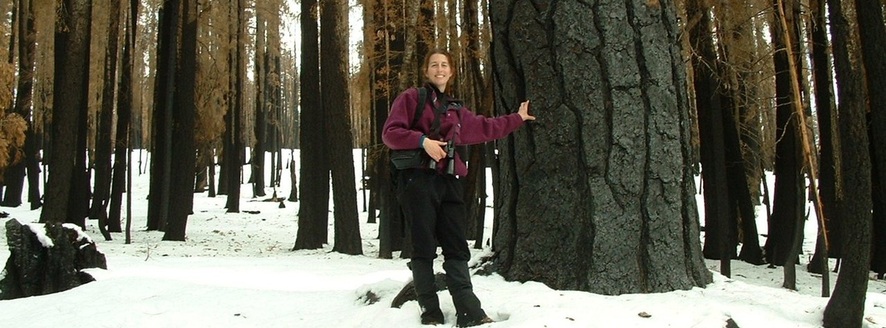
The Wild Nature Institute's goal is to ensure that research on forest fire, insect outbreaks, and wildlife is translated into improved forest-protection policies and effective forest-management activities that conserve snag forests: a critical, scarce, and misunderstood wildlife habitat.
View a Video About the Beauty of Burned Forests
A disconnect exists between the science and public opinion about impacts of high-severity fire and insect epidemics, with the public mistakenly believing that these disturbances destroy wildlife habitat. This false assumption that fire and insects are destructive to wildlife is providing the underlying basis for increased logging. Yet logging—including thinning in the name of fire reduction, and salvage logging of burned trees—is actually the greatest threat to the forest ecosystem.
Forest fires, insect outbreaks, and other disturbances are natural elements of healthy, dynamic forest ecosystems in the western United States, and have been for millennia. Exciting scientific research has demonstrated that many species of plants and animals increase in abundance following high-severity forest fire and insect infestations. Research conducted by Wild Nature Institute scientists and The Institute for Bird Populations found that California Spotted Owls--a species that was previously assumed to be harmed by high-severity fire--prefer to forage for their small-mammal prey in intensely burned forests when that habitat is available. Predatory woodpeckers are strongly dependent upon disturbances: Black-backed Woodpeckers are the most specialized of all birds to eat wood-boring beetle larvae in intensely burned forests and are rarely encountered in unburned areas, and American Three-toed Woodpeckers are far more abundant in forests with spruce beetle epidemics than other areas. In turn, beetle populations can be regulated by these predatory woodpeckers. Far from being a threat, high-severity fire and insect outbreaks actually provide great benefits to forests and many wildlife species.
Western forests have evolved to naturally thin their trees when the forest becomes thick, through forest fires, insects, or disease. These processes cull the weak and make room for the continued growth of stronger trees. Fallen dead trees are recycled in the forest nutrient cycle to feed the soil. After forest fire or beetle outbreaks, green forest naturally regenerates without the need for human intervention. Tree seedlings sprout and grow, and nitrogen-fixing shrubs and forbs replenish the soil and curb erosion. In the meantime, standing dead trees (snags) and logs provide critical shelter for many types of animals, from woodpeckers and bluebirds to flying squirrels and Pacific fishers.
Forest fires, insect outbreaks, and other disturbances are natural elements of healthy, dynamic forest ecosystems in the western United States, and have been for millennia. Exciting scientific research has demonstrated that many species of plants and animals increase in abundance following high-severity forest fire and insect infestations. Research conducted by Wild Nature Institute scientists and The Institute for Bird Populations found that California Spotted Owls--a species that was previously assumed to be harmed by high-severity fire--prefer to forage for their small-mammal prey in intensely burned forests when that habitat is available. Predatory woodpeckers are strongly dependent upon disturbances: Black-backed Woodpeckers are the most specialized of all birds to eat wood-boring beetle larvae in intensely burned forests and are rarely encountered in unburned areas, and American Three-toed Woodpeckers are far more abundant in forests with spruce beetle epidemics than other areas. In turn, beetle populations can be regulated by these predatory woodpeckers. Far from being a threat, high-severity fire and insect outbreaks actually provide great benefits to forests and many wildlife species.
Western forests have evolved to naturally thin their trees when the forest becomes thick, through forest fires, insects, or disease. These processes cull the weak and make room for the continued growth of stronger trees. Fallen dead trees are recycled in the forest nutrient cycle to feed the soil. After forest fire or beetle outbreaks, green forest naturally regenerates without the need for human intervention. Tree seedlings sprout and grow, and nitrogen-fixing shrubs and forbs replenish the soil and curb erosion. In the meantime, standing dead trees (snags) and logs provide critical shelter for many types of animals, from woodpeckers and bluebirds to flying squirrels and Pacific fishers.
Wild Nature Institute scientists conduct targeted studies of forest fire and insect effects on Spotted Owls, Black-backed Woodpeckers, and other forest wildlife. These studies contribute to our understanding of the important role of natural disturbance in forests and counter false reasons for increased logging. Our scientists have extensive experience with outreach to the public, media, policymakers, conservation organizations, and other scientists. We apply this experience to ensure that the results of our research and related studies on the ecological importance of natural disturbances reach a broader audience.
A New Message for Smokey
Watch this Award-Winning Video about Disturbance Ecology and Forest Fire
How to Protect Your Home From Wildfire
Download Scientific Publications about Forest Fire and Wildlife
· Bond et al. 2022. Forest management, Barred Owls, and Wildfire in Northern Spotted Owl Territories.
· Hanson et al. 2021. Disentangling post-fire logging and high-severity fire effects for spotted owls.
· Lee 2020. Spotted Owls and forest fire: Reply.
· Lee et al. 2019. We refute the "conundrum of agenda-driven science," a comment on Peery et al. 2019. and Supporting Information.
· Lee. 2018. Spotted Owls and forest fire: a systematic review and meta-analysis of the evidence.
· Hanson et al. 2018. Effects of post-fire logging on California spotted owl occupancy.
· DellaSalla et al. 2017. Accommodating mixed-severity fire to restore and maintain ecosystem integrity with a focus on the Sierra Nevada of California, USA.
· Bond et al. 2016. Foraging habitat selection by California spotted owls after fire.
· Lee and Bond 2015. Occupancy of California Spotted Owl sites following a large fire in the Sierra Nevada, California.
· Lee and Bond 2015. Previous year's reproductive state affects Spotted Owl site occupancy and reproduction responses to natural and anthropogenic disturbances.
· DellaSala et al. 2014. Complex early seral forests of the Sierra Nevada.
· Odion et al. 2014. Effects of fire and commercial thinning on future habitat of the Northern Spotted Owl.
· Lee et al. 2013. Influence of fire and salvage logging on site occupancy of spotted owls in the mountains of Southern California.
· Bond et al. 2013. Diet and home-range size of California Spotted Owls in a burned forest.
· Lee et al. 2012. Dynamics of California Spotted Owl breeding-season site occupancy in burned forests.
· Bond et al. 2010. Winter movements by California Spotted Owls in a burned landscape.
· Bond et al. 2009. Habitat selection and use by California Spotted Owls in a post-fire landscape.
· Bond et al. 2009. Influence of pre-fire tree mortality on fire severity in conifer forests of the San Bernardino Mountains, California.
· Bond et al. 2002. Short-term effects of wildfires on spotted owl survival, site fidelity, mate fidelity, and reproduction.
· Hanson et al. 2021. Disentangling post-fire logging and high-severity fire effects for spotted owls.
· Lee 2020. Spotted Owls and forest fire: Reply.
· Lee et al. 2019. We refute the "conundrum of agenda-driven science," a comment on Peery et al. 2019. and Supporting Information.
· Lee. 2018. Spotted Owls and forest fire: a systematic review and meta-analysis of the evidence.
· Hanson et al. 2018. Effects of post-fire logging on California spotted owl occupancy.
· DellaSalla et al. 2017. Accommodating mixed-severity fire to restore and maintain ecosystem integrity with a focus on the Sierra Nevada of California, USA.
· Bond et al. 2016. Foraging habitat selection by California spotted owls after fire.
· Lee and Bond 2015. Occupancy of California Spotted Owl sites following a large fire in the Sierra Nevada, California.
· Lee and Bond 2015. Previous year's reproductive state affects Spotted Owl site occupancy and reproduction responses to natural and anthropogenic disturbances.
· DellaSala et al. 2014. Complex early seral forests of the Sierra Nevada.
· Odion et al. 2014. Effects of fire and commercial thinning on future habitat of the Northern Spotted Owl.
· Lee et al. 2013. Influence of fire and salvage logging on site occupancy of spotted owls in the mountains of Southern California.
· Bond et al. 2013. Diet and home-range size of California Spotted Owls in a burned forest.
· Lee et al. 2012. Dynamics of California Spotted Owl breeding-season site occupancy in burned forests.
· Bond et al. 2010. Winter movements by California Spotted Owls in a burned landscape.
· Bond et al. 2009. Habitat selection and use by California Spotted Owls in a post-fire landscape.
· Bond et al. 2009. Influence of pre-fire tree mortality on fire severity in conifer forests of the San Bernardino Mountains, California.
· Bond et al. 2002. Short-term effects of wildfires on spotted owl survival, site fidelity, mate fidelity, and reproduction.
Links to More Multimedia about Forest Fire and Beetles
Forest Fire Truths
The Wild Nature Institute Thanks our Donors and Supporters of the Snag Forest Habitat Protection Campaign:
The Environment Now Foundation, the Norcross Wildlife Foundation, and ESRI, Inc.
The Environment Now Foundation, the Norcross Wildlife Foundation, and ESRI, Inc.