
|
Wild Nature Institute’s CAG education program organized a two-week Snake Blitz to teach Tanzanian children and teachers appreciation for snakes and prevent snake bites—which saves people and snakes alike. From 19 February to 3 March, a whopping 1,694 children from 5 primary schools in the Monduli district participated in the event, and learned all about the ecological importance of snakes, snake identification, how to behave around snakes to avoid conflict, and what to do if bitten. The kids learned through fun activities such as dramatic demonstrations and memory games, as well as with a beautiful snake activity book designed by our collaborators Mirthe Aarts and Megan Strauss together with Monica Bond, and produced by WNI. Children were given a questionnaire to fill out before and after participating, so we can quantify what the children learned and how our Saving People Saving Snakes education program affected their perceptions about snakes.
We warmly welcomed Gwido Aldo to our Saving People Saving Snakes program (see attached photos). Aldo is a Tanzanian snake expert and works with Tanzania Snake Conservation Education and Awareness (TASCEA) developing and delivering snake educational and awareness programs and collaborating with authorities to protect critical snake habitats. He is the perfect person to join our education team to share with children the importance of respecting these misunderstood and maligned reptiles. Veila and Jackline did an absolutely amazing job organizing the Snake Blitz with 2 visits to each of the 5 primary schools. They distributed 700 snake activity books, brought 175 children to visit the Meserani Snake Park to see snakes first-hand, and took 62 kids on a nature walk near the school. It was an exhausting but productive two weeks! As always, we are deeply grateful to our donors for funding our CAG education program. While this activity was not directly about giraffes, our Saving People Saving Snakes project fosters respect and appreciation for all species in nature which bolsters community support for protecting all wildlife, including giraffes.
0 Comments
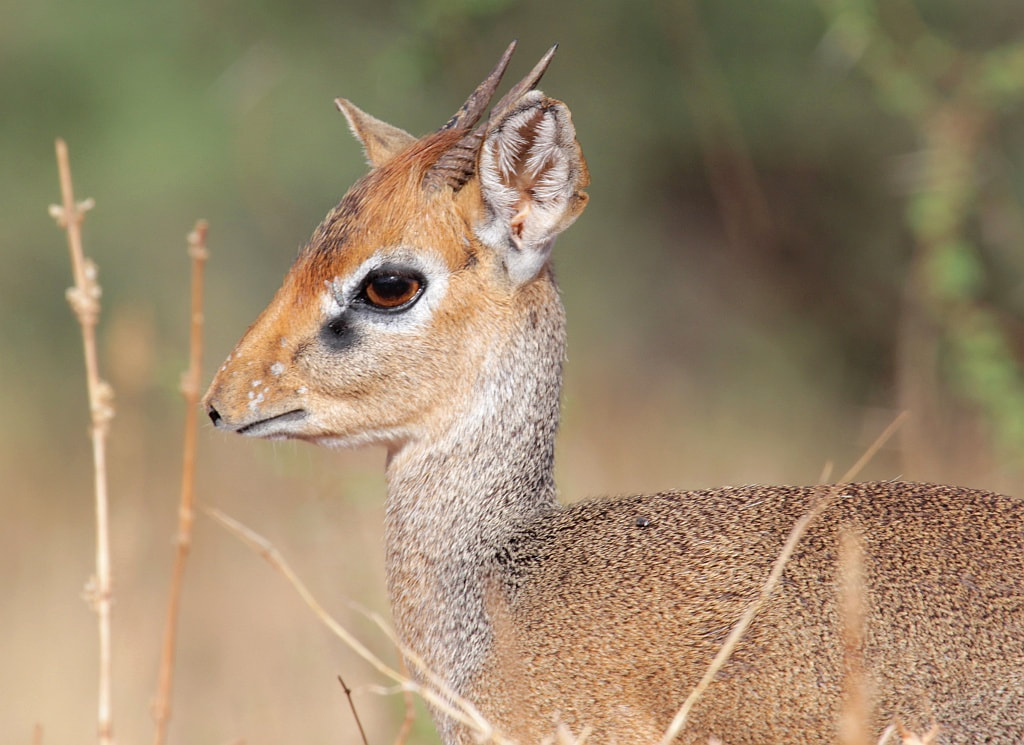
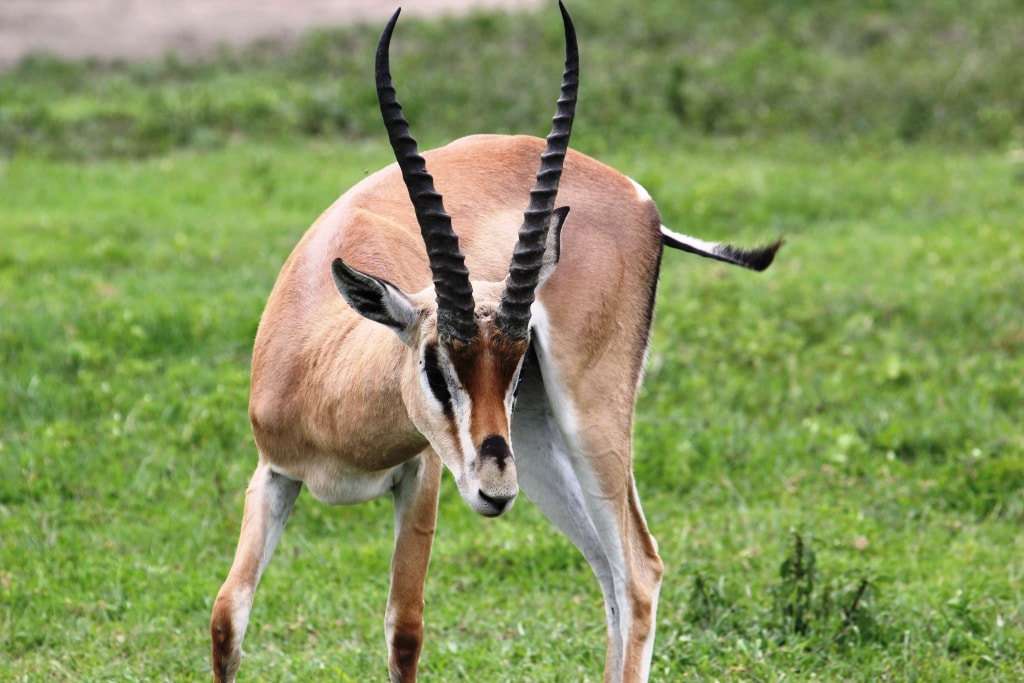
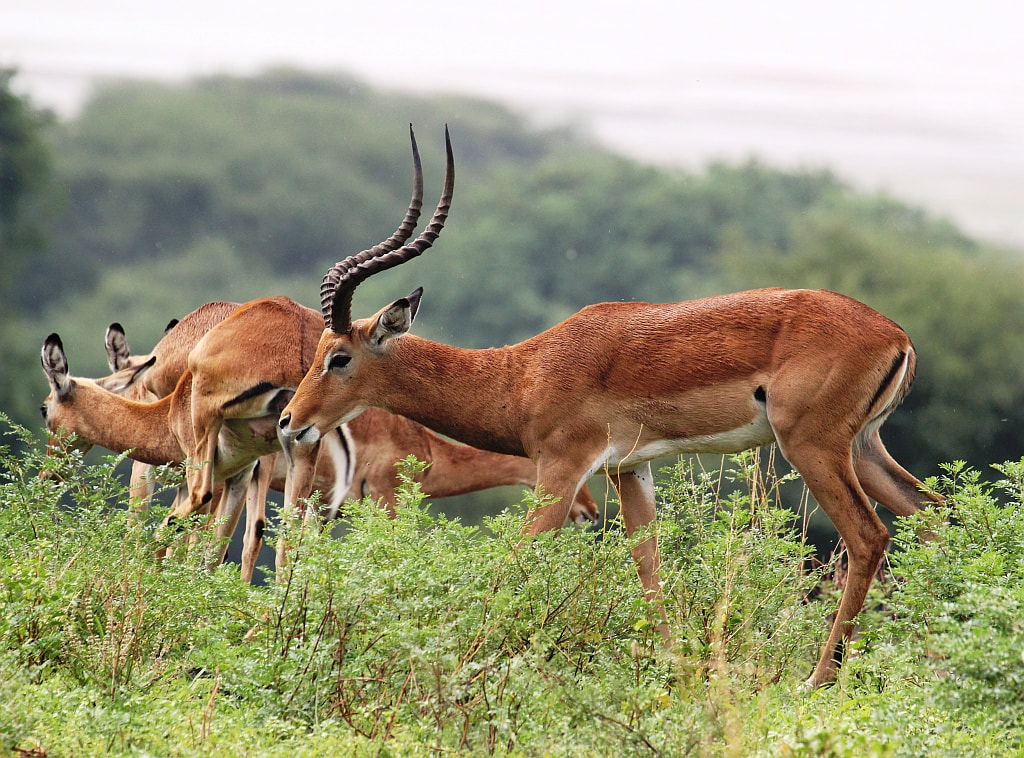
New research shows that for antelope populations in East Africa, it is not just about the weather but where they can roam. This highlights why we need big, connected spaces for conservation. Environmental changes threaten naturally heterogeneous and dynamic ecosystems that are essential in creating and maintaining a rich, resilient, and adaptable biosphere. In East Africa’s savanna, antelope populations are vital for a healthy and functioning ecosystem. They shape the vegetation, disperse seeds, cycle nutrients, and provide food for other animals. A natural dynamic mosaic of vegetation types, water sources, and weather forms a delicate balance with the antelopes that is more and more disrupted by human influences and climatic changes. To protect these hotspots of biodiversity and enable the ecosystem to work properly, it is vital to maintain healthy antelope populations. Previous studies have shown that densities of savanna antelopes vary based on location, season, and year, but no empirical studies had ever examined all these effects together. Simultaneously studying how environmental variation over space and time affects the local densities of antelope species could resolve whether location, or seasonal or annual variation is the most important factor driving local densities of these wildlife. Using seven years of antelope monitoring data from the Tarangire Ecosystem in Tanzania, an international collaboration between the University of Zurich and the Wild Nature Institute examined this question. They found spatial factors explained the largest proportion of variation in density for four of the five antelope species they studied. These spatial covariates included proximity to water and human activities as well as vegetation community—suggestive of both bottom-up (resources) and top-down influences (avoiding natural predators) on local densities. The research was published in the journal Population Ecology. In the Tarangire Ecosystem, antelopes respond to changing climatic conditions and the fluctuating availability of resources by moving across space. Lead author Lukas Bierhoff, a graduate student in the Department of Evolutionary Biology and Environmental Studies at University of Zurich, said “these results demonstrate that antelopes depend upon water and forage availability, but are flexible in their responses to climatic variation when they have the option to move and seek out the necessary resources for the current conditions.” Helping antelopes move across space to adapt to climate and habitat changes As natural savanna habitats and climate are rapidly being altered by human activities, effective conservation strategies are needed to ensure the persistence of antelopes and all the services they provide to maintain healthy ecosystems. “This study provides further evidence that the protection of large, connected areas of different habitat types and permanent water sources are the best way to maintain high biodiversity and a functioning biosphere. Providing habitat options for the antelopes enables them to respond to a temporally changing world by moving across space,” Bierhoff said. The research team also identified guilds of antelopes whose densities co-varied, and that might respond similarly to targeted and coordinated conservation strategies, thus increasing the efficiency of management actions. “Effective conservation actions include protecting rivers and other water sources from diversion and pollution; reducing bushmeat poaching; keeping and restoring movement corridors; and maintaining the diversity of natural vegetation types” said Derek Lee, Wild Nature Institute principal scientist and senior author of the paper. “Antelopes are critically important to Tanzania’s economy as well as its ecology, so sustaining thriving populations of these animals is a win-win for people and wildlife.” Citation: Bierhoff L, Bond, ML, Ozgul A, Lee DE. 2024. Anthropogenic and climatic drivers of population densities in an African savanna ungulate community. Population Ecology. https://doi.org/10.1002/1438-390X.12182
In 2023, the Wild Nature Institute continued our Science, Education, and Advocacy for wildlife in savannas of East Africa, a biologically rich region threatened by human activities. We completed another year of the world’s largest study of giraffes using non-invasive photographic identification and DNA sampling. Together with our research partners around the world we published 4 new scientific papers about giraffes, and shared our results with other scientists, students, government decision-makers, and the media. Our Celebrating Africa’s Giants education program reached ever more communities in Tanzania. Children learned about wildlife, ecology, and conservation in their classrooms; celebrated World Giraffe Week and Elephant Fun Day; nurtured and planted trees; and visited their local national parks for the first time. Click here to learn about our accomplishments in 2023. We could not have met our goals without the support of our donors and partners. We are deeply grateful, as always. 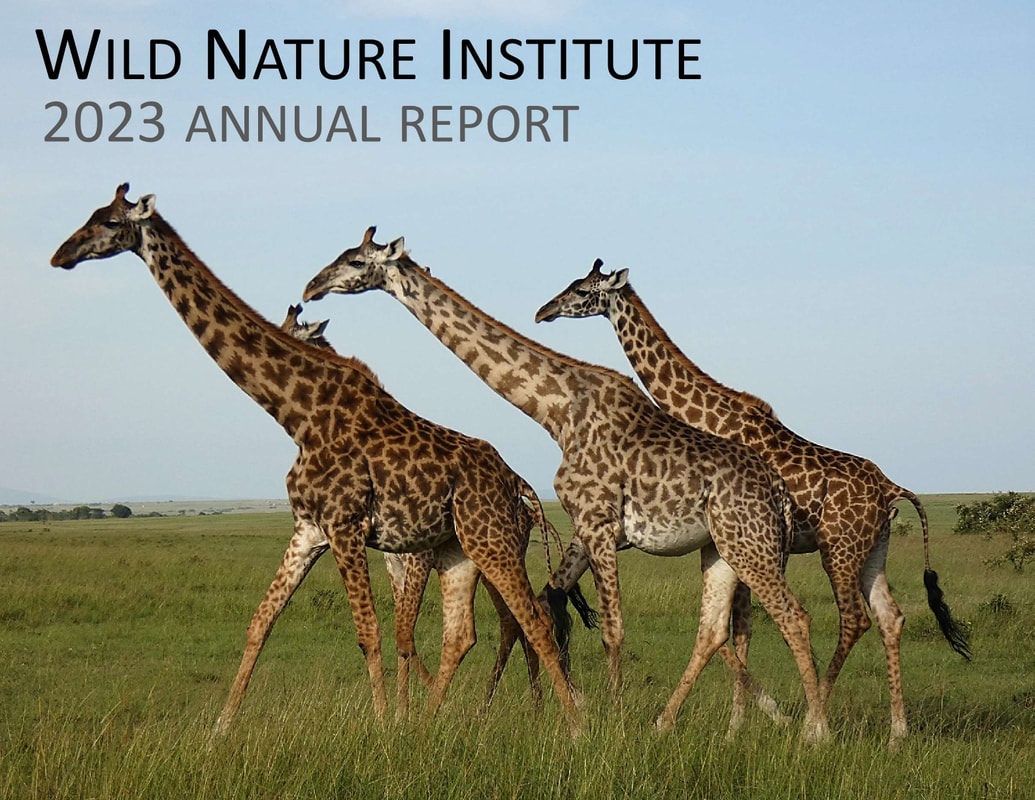 More than 2000 schoolchildren and teachers from 6 schools in the Mtowambu area of Tanzania celebrated Elephant Fun Day on 27 October, hosted by Wild Nature Institute! The day kicked off with a big parade through town with costumes, banners, and posters, and culminated with a football and netball sports tournament for girls and boys! We also provided a healthy lunch for all participants. Thank you to all of our partners and donors for helping us show the community that we love elephants and want to protect them! 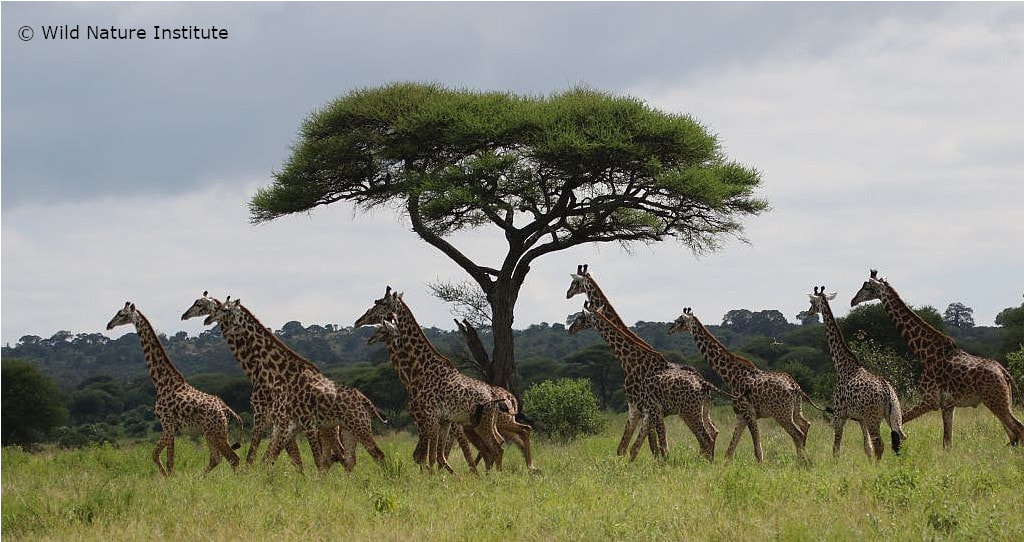 Iconic animals such as giraffes can be flagship species for conservation because of their charisma and popularity among the public. A new study explored the various threats to giraffe populations, and how specific human actions can mediate those threats so that giraffes and people can thrive together in African savannas. The giraffe is an icon of the African savannas, instantly recognizable with its unique shape and height and dazzling spot patterns. Yet despite the popularity of giraffes around the world, they face major challenges to their continued surviving in the wild. Numbers of giraffes and other large, charismatic animals such as elephants and rhinos have plummeted, and giraffes are now listed as an endangered species. In research published today in the journal Global Change Biology, scientists from the Doñana Biological Station, Penn State University, and Wild Nature Institute showed that effective wildlife law enforcement which protects giraffes from illegal hunting is the best way to keep giraffe populations healthy and thriving. 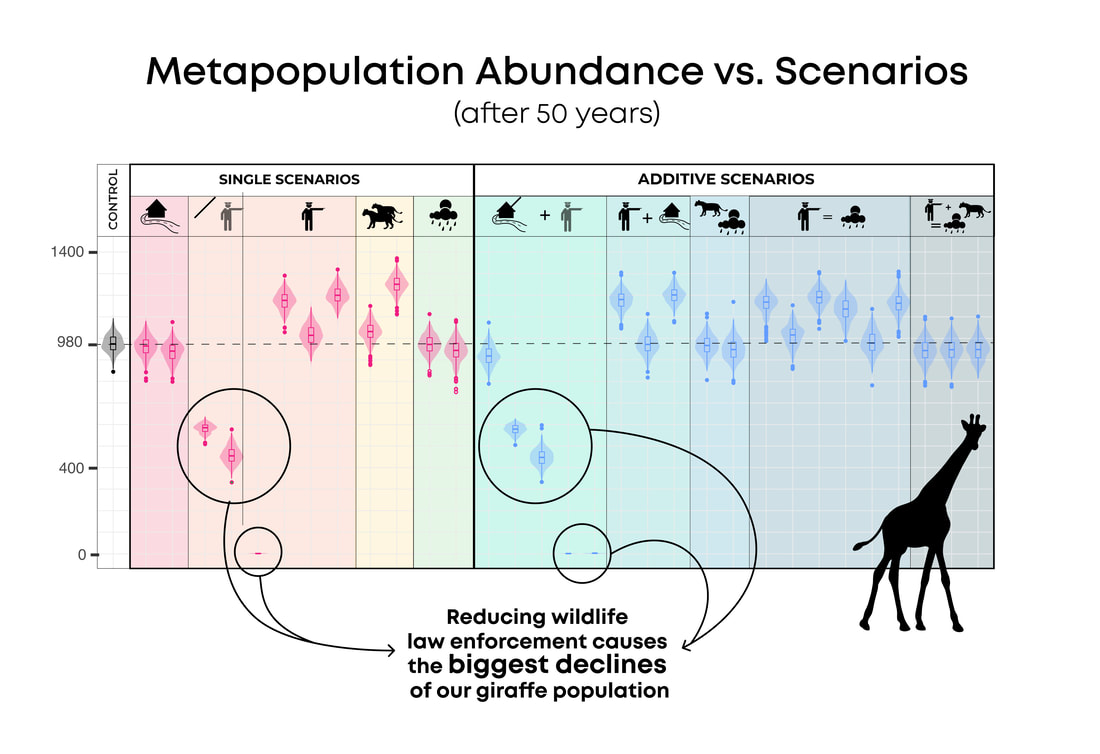 Giraffes are physically large, so they require a lot of space to move around. They live a long time, nearly 30 years, and are slow to breed, with giraffe mothers first giving birth at the age of 6 and producing only one calf about every 2 years thereafter. Giraffes are increasingly in danger from one of the most cunning predators of all: people. Giraffes are killed by poachers working for criminal syndicates to sell their meat and body parts in bushmeat markets.
Giraffes are also losing their natural savanna habitat to farms and urban sprawl, and climate change is increasing heavy rainfall events which spread diseases that cause giraffe deaths. To conserve giraffes we need to know which natural- and human-caused pressures are most important in driving their population declines, and whether human actions could mediate the threats. In this study the scientists aimed to understand how changes in land use, illegal hunting, and rainfall affected the abundance of Masai giraffes in the human-impacted Tarangire region of Tanzania in East Africa. This region hosts two world-class national parks, an ecotourism livestock ranch, and village lands, all with different levels of land and wildlife conservation. The scientists have monitored giraffes in the area for nearly a decade to learn how each of these threats influences giraffe survival. The researchers then combined the information they learned from previous studies to create an individual-based model that simulated realistic population dynamics and extinction risk under different scenarios of environmental change over 50 years. They tested a set of credible threats to the persistence of giraffes in this system, including an expansion of towns along the edges of the study area, loss of connectivity between key habitat areas, improved or reduced wildlife law enforcement, changes in predation pressure on giraffe calves from changes in lion and wildebeest populations, and more heavy rainfall events as predicted for East African savannas. They also tested combinations of scenarios, as well as management actions that could mitigate the threats. The study showed that the greatest risk of population declines and extinction for giraffes is caused by a reduction in wildlife law enforcement leading to more poaching. Furthermore, an increase in law enforcement would mitigate the effects of the most extreme predicted increases in heavy rainfall and the expansion of towns. The study highlights the great utility of law enforcement as a nature conservation tool. The scientists’ research demonstrated that giraffes benefit from the presence of traditional livestock herders on the rangelands outside parks that are shared by giraffes and pastoralists. The problems arise when giraffe rangeland habitat is plowed into farms, when towns and other development sprawl into the habitat and force giraffes to move longer distances to find food and water, and when people kill giraffes for bushmeat markets. The scientists recommend that wildlife law enforcement be expanded in village lands outside of protected areas, legal livelihoods be promoted to reduce the perceived need for poaching for income, and wildlife movement pathways be permanently protected from farming, mining, and infrastructure to enable giraffes and migratory wildebeest to access high-quality habitats. These measures would increase the population of giraffes in the Tarangire region and contribute to the recovery of this endangered species, while ensuring people and giraffes thrive together. Citation: Bond ML, Lee DE, Paniw M. Extinction risks and mitigation for a megaherbivore, the giraffe, in a human-influenced landscape under climate change. Global Change Biology. https://onlinelibrary.wiley.com/doi/10.1111/gcb.16970 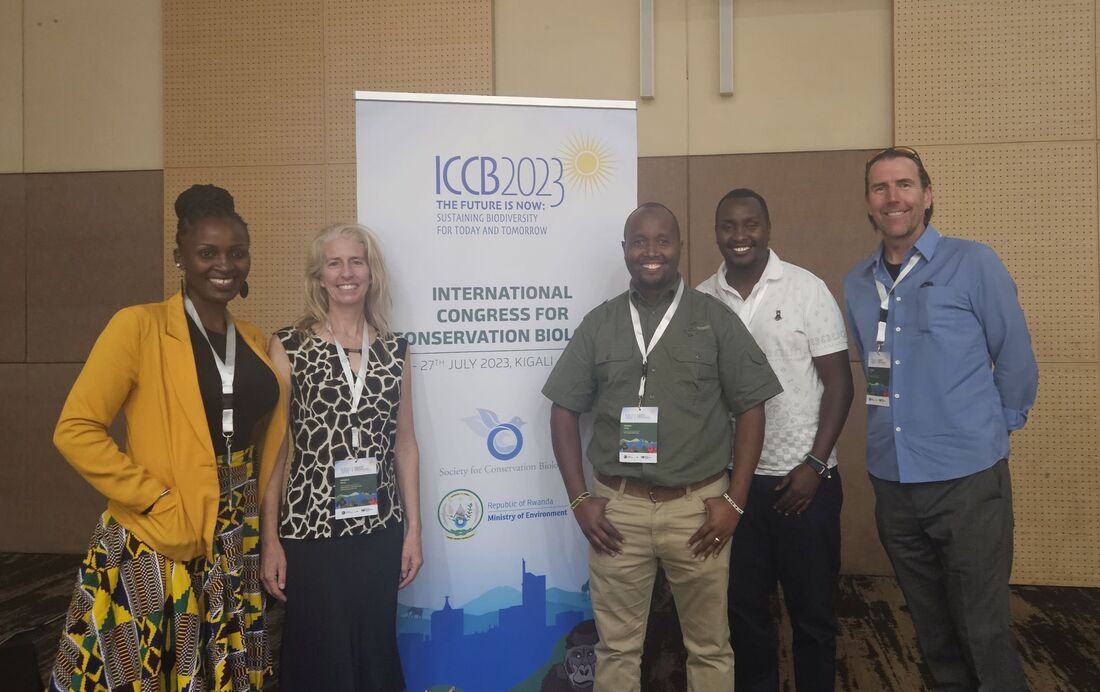 Veila Makundi, Monica Bond, George Lohay, James Madeli, and Derek Lee attend the ICCB conference in Kigali, Rwanda. We are excited that 5 members of the Wild Nature Institute giraffe research and education team attended the International Congress on Conservation Biology in Kigali, Rwanda at the end of July. We presented 4 talks about our giraffe research to an international audience of conservation biologists and educators:
The Wild Nature Institute honored World Giraffe Day 2023 on 21 June with a celebration involving primary school students and Maasai women groups living in the Tarangire-Manyara Ecosystem, one of the most important ecosystems for giraffes in Tanzania. The aim was to share with the community that the giraffe population is declining. We used arts and crafts, songs and dances, and talks from experts about giraffes to share this message. 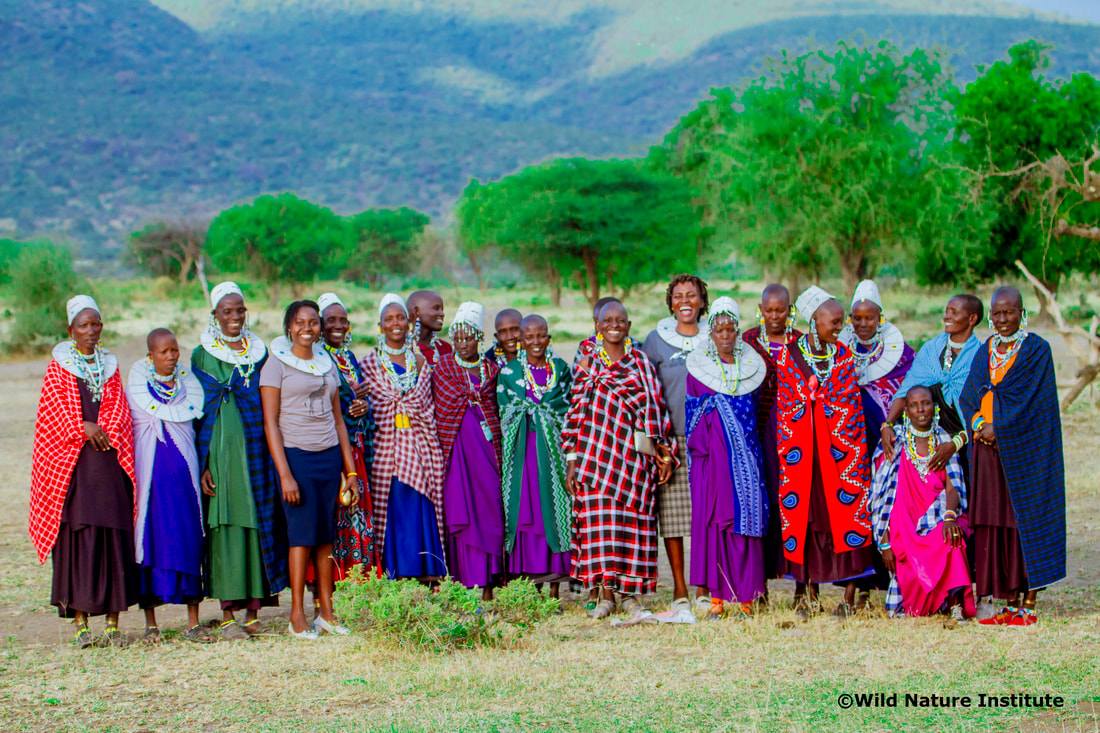 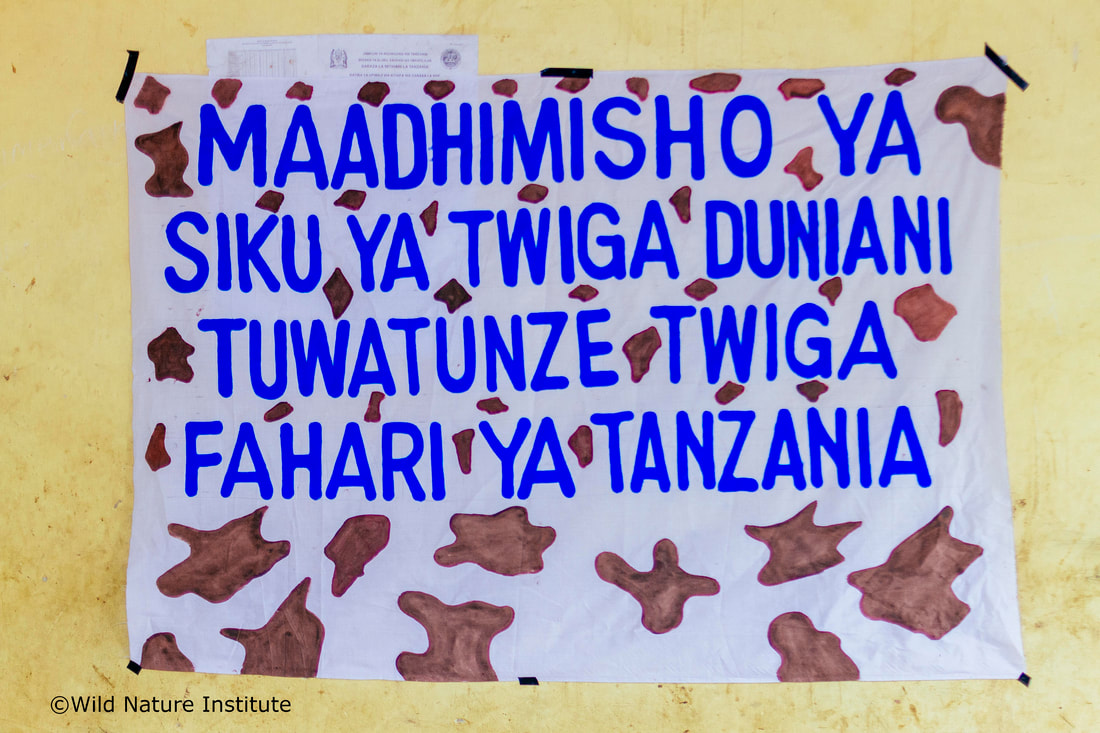 Celebration of World Giraffe Day! We Protect Giraffes, the Pride of Tanzania. The students drew pictures of giraffes, and the Maasai women designed giraffe-themed handicrafts, and other items such as pots, cups, and plates that were spotted like giraffe spots using clay soil. Some women used beads to make bracelets, earrings, and necklaces that represented giraffes. James Madeli, Wild Nature Institute’s Tanzanian research coordinator, spoke with the community members about how giraffes are surviving in the wild. He noted that the giraffe population is declining due to loss of habitat, poaching, and climate change effects. The Maasai play a big role in conservation by protecting rangelands for their livestock, thus benefiting wild animals too. Every group presented what they had created, and sang traditional songs for giraffe day. This was an exciting part of the event because everyone was happily showing off and making fun drama and competing to be the best group. We also handed out World Giraffe Day t-shirts to participants. The event closed with soft drinks and delicious food that was cooked by the villagers themselves. The groups sent words of gratitude to the Wild Nature Institute and all our partners in conservation who helped make this event possible. It was indeed an educational—but most importantly FUN—week, from the schools to the community. More than 200 women, men, and children were reached on World Giraffe Day. 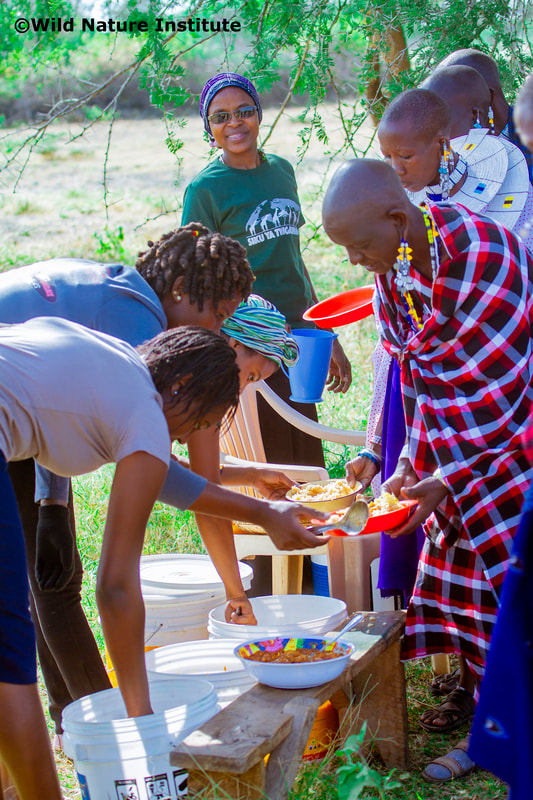  visit: www.worldgiraffeweek.org/
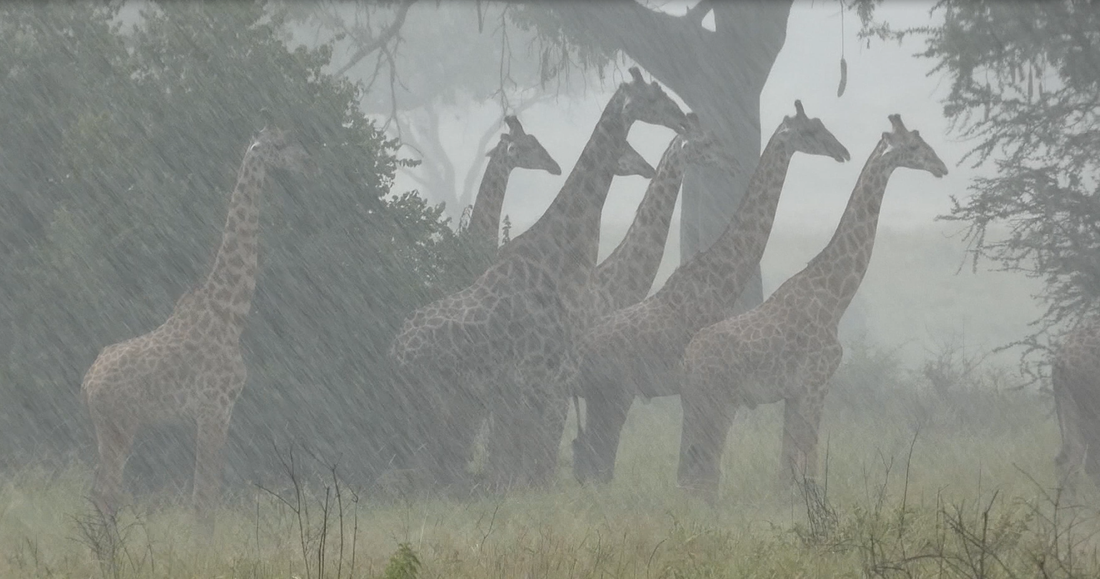 Giraffes in the East African savannas are adapting surprisingly well to the rising temperatures caused by climate change. However, they are threatened by increasingly heavy rainfall, as researchers from the Wild Nature Institute, University of Zurich and Pennsylvania State University show.
Climate change is expected to cause widespread declines in wildlife populations worldwide. Yet, little was previously known about the combined climate and human effects on the survival rates not only of giraffes, but of any large African herbivore species. Now researchers from the University of Zurich and Pennsylvania State University have concluded a decade-long study – the largest to date – of a giraffe population in the Tarangire region of Tanzania. The study area spanned more than a thousand square kilometers, including areas inside and outside protected areas. Contrary to expectations, higher temperatures were found to positively affect adult giraffe survival, while rainier wet seasons negatively impacted adult and calf survival. First exploration into the effects of climate variation on giraffe survival Led by Monica Bond, a postdoctoral research associate in the Department of Evolutionary Biology and Environmental Studies at the University of Zurich and co-founder of Wild Nature Institute, the research team quantified the effects of local anomalies of temperature, rainfall, and vegetation greenness on the probability of survival of the giraffes. They also explored whether climate had a greater effect on giraffes that were also experiencing human impacts at the edges of the protected reserves. “Studying the effects of climate and human pressures on a long-lived and slow-breeding animal like a giraffe requires monitoring their populations over a lengthy time period and over a large area, enough to capture both climate variation and any immediate or delayed effects on survival,” said Bond. The team obtained nearly two decades of data on local rainfall, vegetation greenness, and temperature during Tanzania’s short rains, long rains, and dry season, and then followed the fates of 2,385 individually recognized giraffes of all ages and sexes over the final 8 years of the two-decade period. Surprising effects of temperature on giraffe survival The team had predicted that higher temperatures would hurt adult giraffes because their very large body size might make them overheat, but higher temperatures positively affected adult giraffe survival. “The giraffe has several physical features that help it to keep cool, like long necks and legs for evaporative heat loss, specialized nasal cavities, an intricate network of arteries that supply blood to the brain, and they radiate heat through their spot patches,” noted Derek Lee, associate research professor of biology at Pennsylvania State University, co-founder of Wild Nature Institute, and senior author of the study. However, Lee also pointed out that “temperatures during our study period may not have exceeded the tolerable thermal range for giraffes, and an extreme heat wave in the future might reveal a threshold above which these massive animals might be harmed.” Heavy rains may increase parasites while reducing nutritional value of vegetation Survival of giraffe adults and calves was reduced during rainier wet seasons, which the researchers attributed to a possible increase in parasites and disease. A previous study in the Tarangire region showed giraffe gastrointestinal parasite intensity was higher during the rainy seasons than the dry season, and heavy flooding has caused severe outbreaks of diseases known to cause mortality in giraffes, such as Rift Valley Fever Virus and anthrax. The current study also found higher vegetation greenness reduced adult giraffe survival, potentially because faster leaf growth reduces nutrient quality in giraffe food. Human pressure place additional stress on already declining populations Climate effects were exacerbated by the giraffe’s proximity to the edge of protected reserves, but not during every season. “Our findings indicate that giraffes living near the peripheries of the protected areas are most vulnerable during heavy short rains. These conditions likely heighten disease risks associated with livestock, and muddy terrain hampers anti-poaching patrols, leading to increased threats to giraffe survival,” said Arpat Ozgul, University of Zurich professor and study author. The team concluded that projected climate changes in East Africa, including heavier rainfall during the short rains, will likely threaten persistence of giraffes in one of Earth’s most important landscapes for large mammals, indicating the need for effective land-use planning and anti-poaching to improve giraffes’ resilience to the coming changes. How the Masai giraffe population has changed over 40 years in Tanzania’s Arusha National Park1/20/2023 Giraffes are Tanzania’s national animal and beloved around the world. Despite their popularity, however, populations of the Masai giraffe have declined by 50% since the 1980s to about 35,000 individuals, and they are now considered to be endangered. Masai giraffes are found in Arusha National Park in northern Tanzania and are an important part of the attraction of the park, contributing to the country’s economy. Urban development of Arusha city and agricultural expansion have caused Arusha National Park to be increasingly isolated from other protected areas in northern Tanzania, but the current status of giraffes in the park was not known. In a new paper published in the African Journal of Ecology, scientists from Pennsylvania State University, University of Zurich, and Wild Nature Institute enumerated individual giraffes in Arusha National Park to see how well these iconic megaherbivores were doing compared to 40 years ago. 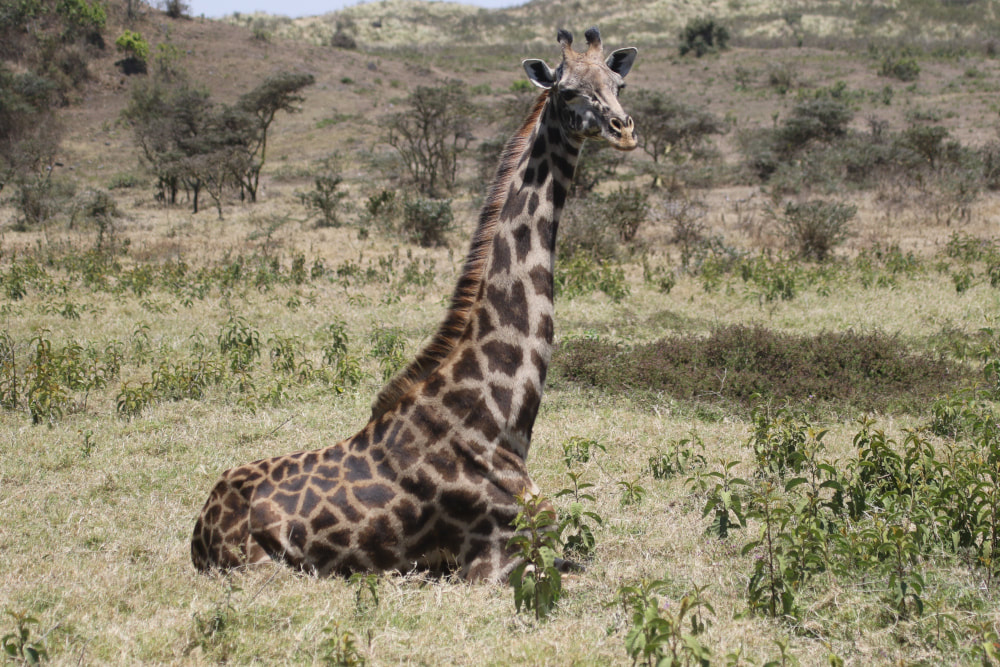 A female Masai giraffe relaxes in Arusha National Park The only previously published data on the Masai giraffe population of Arusha National Park were from 1979 and 1980, 20 years after the park was established. In the new paper, scientists monitored individual giraffes in Arusha National Park from 2021 to 2022 to provide an update on the current population size, population sex and age structure, and movements. The giraffes were identified individually by their unique spot patterns. The scientists also collected DNA from dung samples to assess the genetic connectivity of the park’s giraffes with other giraffe populations in the region. The scientists documented a 49% population decline—similar to the overall decline of the Masai giraffe throughout its native range in Tanzania and southern Kenya—and changes in the age distribution, adult sex ratio, reproductive rate, and movement patterns relative to the previous study. Mitochondrial DNA analysis revealed genetic connectivity between Arusha National Park and other Masai giraffe populations east of the Gregory Rift Escarpment in northern Tanzania and south-eastern Kenya, providing evidence that Masai giraffe once moved widely across the landscape.
“Every giraffe population matters,” said Dr. Derek Lee, associate research professor at Pennsylvania State University, co-founder of the Wild Nature Institute, and the study’s lead author. He recommended that “the Arusha National Park giraffe population could be helped through community conservation efforts supporting indigenous communities outside the park that empower local law enforcement and provide tangible economic benefits of wildlife protection.” However, additional measures should be taken to secure the future of the giraffes in Arusha National Park. “We not only need to safeguard individual animals,” noted Dr. George Lohay, a geneticist from Pennsylvania State University and co-author of the study. “We also need to maintain and restore habitat connectivity with other populations to keep needed gene flow for genetic diversity.” Dr. Monica Bond, a postdoctoral research associate at University of Zurich, Wild Nature Institute co-founder, and senior author of the study, noted that protecting giraffes helps other animals as well. “The giraffes’ large body size and large space use needs make them particularly vulnerable to extinction,” she stated, “but actions to protect them will also benefit smaller species that share the same savanna habitat.” Lee, D. E., Lohay, G. G., Madeli, J.,Cavener, D. R., & Bond, M. L. (2023). Masai giraffe population change over 40 years in Arusha National Park. African Journal of Ecology, 00, 1–9. https://doi.org/10.1111/aje.13115 |
Science News and Updates From the Field from Wild Nature Institute.
All Photos on This Blog are Available as Frame-worthy Prints to Thank Our Generous Donors.
Email Us for Details of this Offer. Archives
March 2024
|
 RSS Feed
|
Mailing Address:
Wild Nature Institute PO Box 44 Weaverville, NC 28787 Phone: +1 415 763 0348 Email: info@wildnatureinstitute.org |
|
The Wild Nature Institute is a New Hampshire non-profit corporation and a 501(c)3 tax-exempt organization.
© Copyright 2010. All Rights Reserved.